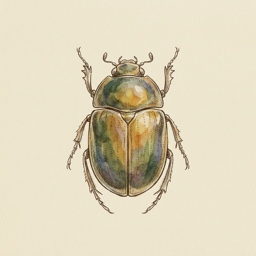
A short discovery walk
Four simple steps, what to bring, and alternatives for young writers or a day when no insects appear.
One small animal. A few careful observations. A page of discoveries to bring home. This 15-20 minute activity helps families look closely before guessing a name.
Download the free kit (PDF)Just the observation sheet (1-page PDF)
6 pages · US Letter · Printer-friendly · No app or signup required
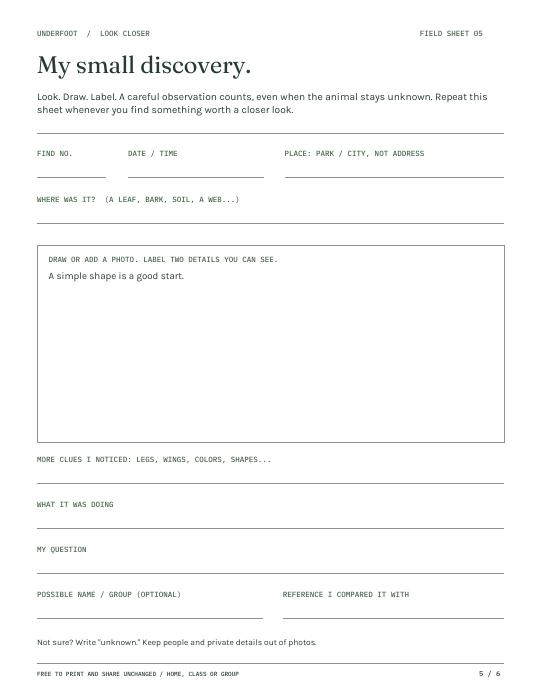
Start with just page 5 for your walk. The other pages are references and repeat-visit ideas. Print or share the complete kit for your family, class or group.
Four simple steps, what to bring, and alternatives for young writers or a day when no insects appear.
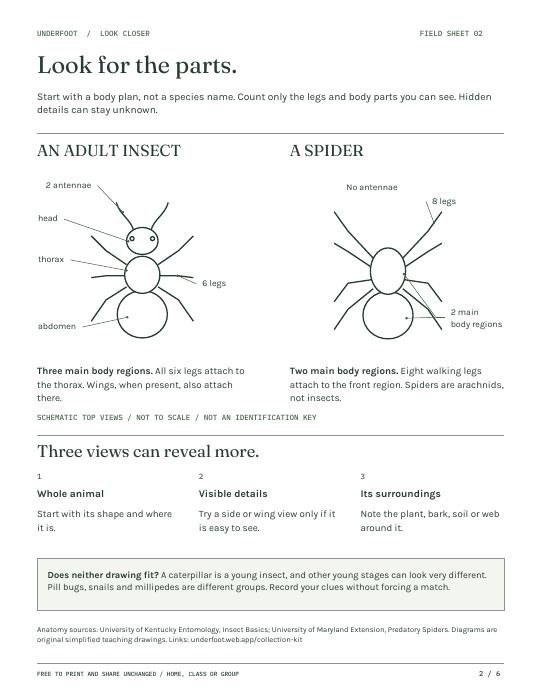
Labeled insect and spider diagrams teach body regions and leg counts, with tips for useful observation views.
Common names first, with visible clues for eight insect orders. These are starting points, not a complete identification key.
Practice telling a visible observation from a guess, then decide what evidence would help.
A large sketch area, simple prompts and optional identification. A grown-up can write a younger explorer's words.
An observation index and three reasons to return to the same place. No need to fill every row.
Check with the teacher or program leader before starting. Ask which format, labels and identification level they require. This kit supports a photographic observation project; it does not replace a required physical collection or guarantee assignment credit.
Observe with an adult, follow site rules and leave habitat undisturbed. Keep unknown insects and caterpillars unhandled. A photograph or app identification is not permission to touch.
Use a city, county or public park name instead of an address. There are no name, school or contact fields. Keep people and private details out of photographs, and have an adult check location information before sharing.
The printable works on its own. If you want help exploring a possible identification, Underfoot is an iPhone field guide that turns finds into illustrated specimen cards.
The first 10 species are free, with optional paid Pro. Photo identification needs internet; field-guide browsing works offline. Treat a suggested identification as a starting point and compare it with visible details and a reliable reference.
The kit is an introduction, not a complete identification key. These university resources support the order clues and offer a place to continue:
These organizations have not endorsed Underfoot. The activity sheets and introductory summaries were prepared by Underfoot.